

Whites Recycling Supports UK Farmers by Providing Advice for the Best Agronomic Practices.
A typical application supplies vital N, P, K and SO₃ in both readily-available and slow-releasing forms. Our applications also supply other secondary and trace elements, build organic-matter and return carbon to the soil.

What We Can Do for Your Farm
With over three decades of experience, Whites Recycling has a wealth of knowledge and the expertise to provide a high standard of service. We always strive for efficiency and utilise a modern fleet of equipment and technologies to maximise the nutrient benefit to the land. Meanwhile, our in-house Agronomy Team keeps us ahead of industry news and trends so that we can deliver the best agronomic practices to our clients. We offer:
- Soil audits
- Field audits
- Total nutrient solutions
- FACTS & WAMITAB advisors
At Whites Recycling, food and liquid recycling is our bread and butter, but our Agronomy service is a perfect example of how we strive to go the extra mile.
Our Agronomy department supports our network of Farm Liaison Managers. By offering crucial advice regarding nutritional requirements for soil and cropping, our farmer clients can implement good agronomic practices moving forwards. Our team are FACTS trained to provide this unique service in the farming and waste industry.
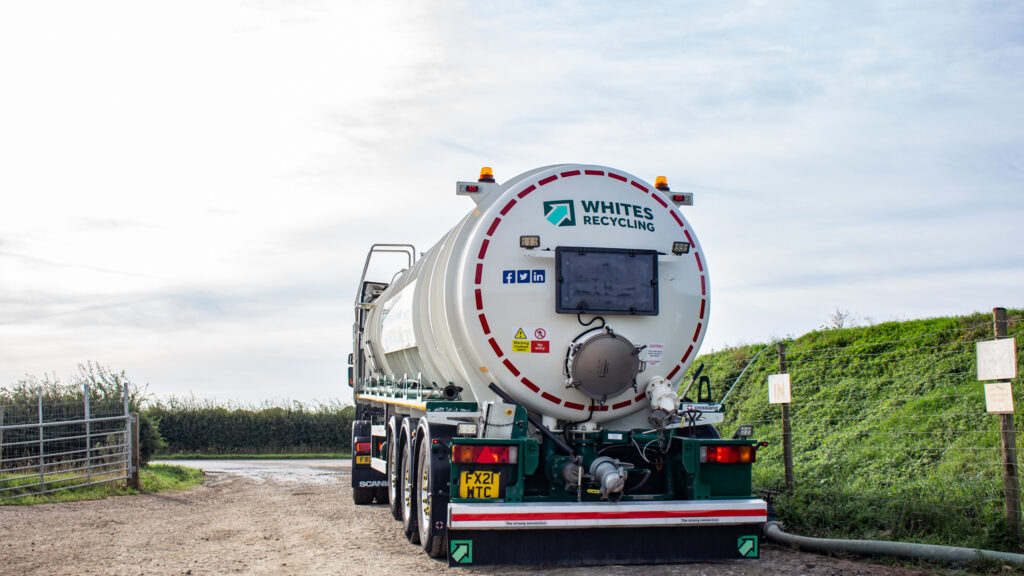
We transport liquid wastes from customer production facilities to local, registered agricultural field sites for recycling. To ensure that this process is as safe and reliable as possible, our modern fleet of tankers handles delivery. The primary method of spreading this waste is via an umbilical tractor system, which maximises the nutrient benefit to the land.
Benefits for your farm
Whites Recycling has built up an impressive local agricultural land bank over the years, covering both arable and grassland. We also offer storage solutions — these can be temporary or permanent stores. We make use of redundant lagoons, allowing us to offer our liquid waste customers a complete waste management service for 12 months of the year.
Our in-house Agronomy Team supports our network of Farm Liaison Managers (FLM), enabling us to provide detailed and precise recommendations for the utilisation of our organic liquid waste on to agricultural land. Our staff have a wealth of practical on-farm experience, alongside both FACTS and WAMITAB qualifications. We keep ahead of industry news and trends so that we can deliver the best agronomic provision for our farmers. We utilise a modern fleet of tankers with equipment and technologies to fulfil Best Available Techniques for spreading. This enables us to maximise the full nutrient potential of the material, whilst protecting the environment.

All of our wastes are organic and sustainably sourced from the food and drinks industries, completing the natural nutrient cycle of the food production process. Each waste is analysed regularly to ensure it has a useful source of nutrients and confers justifiable agricultural benefit in its own right; reducing the need to apply inorganic, synthetic fertilisers.
Our top priority is to liaise with our farmers and growers to spread around their individual requirements and rotations. To ensure each parcel of land is suitable, our FLM will discuss your cropping rotations with you, carry out a field inspection and take soil samples. All our deployed land is authorised and regulated through the Environment Agency. Our Agronomy Team carefully monitors all of our operations and activities to ensure we comply with Code of Good Agricultural Practice, Nitrate Vulnerable Zone, and Environmental Permitting regulations.